

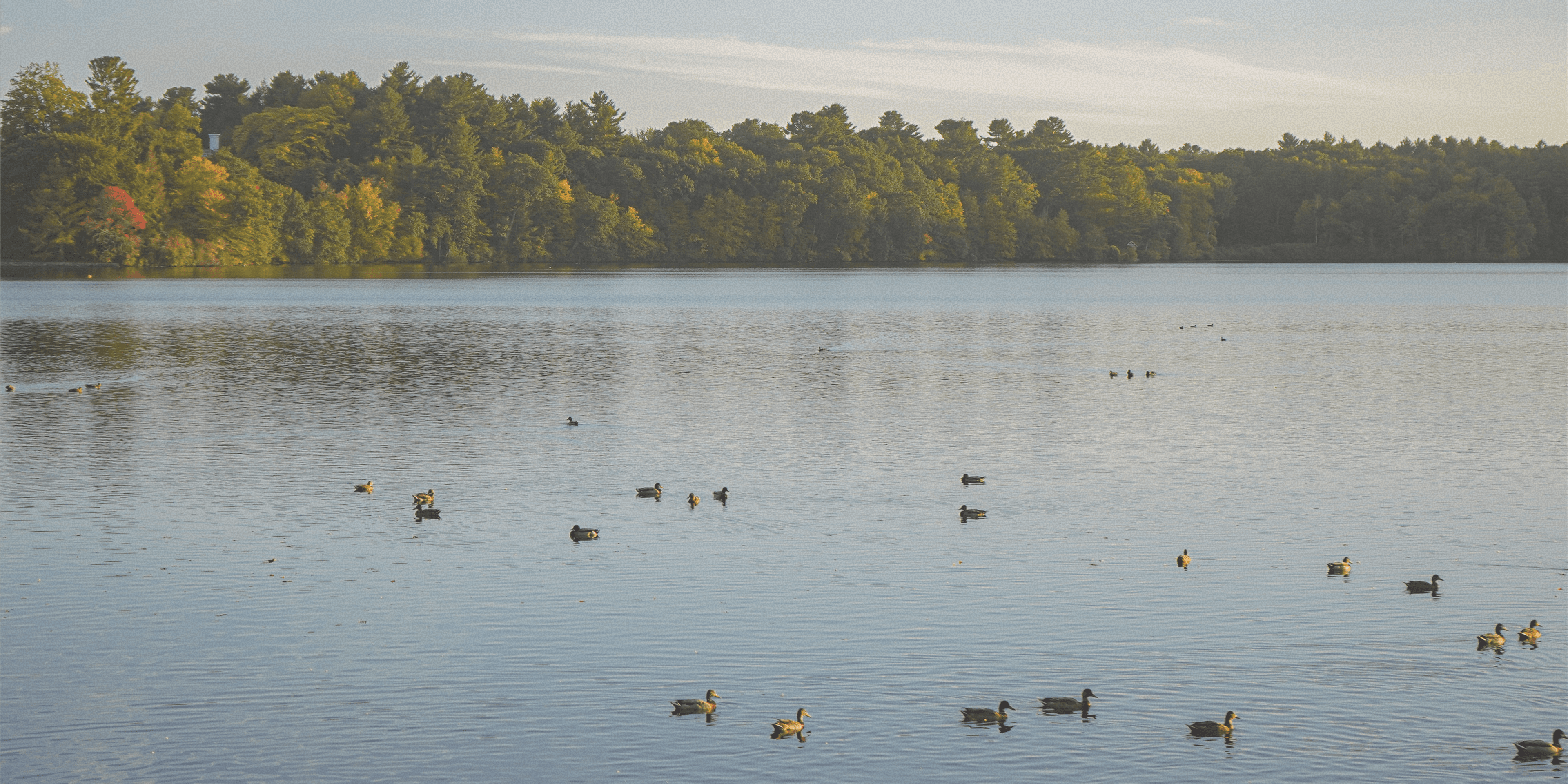
Birds are everywhere, but have you listened to them closely?
Birding is a hobby getting more popular today. However, not everyone birds the same way. Have you ever wondered how people with blindess and low vision enjoy this hobby?
In this project, I facilitated field observation and interviews with birders of all visual abilities and led mixed ability co-design workshops and creative strategy to reframe birding for people of all abilities.
My role
UX Researcher & Strategist
Team
UX Researcher
UX Strategist
Product Designer
Skills
Co-design workshops
Creative strategy
Mixed-method analysis
Timeline
Jan 2026 – Present
Overview
From checklists to shareable playlists
Part 1. Birding-by-ear context
Birding by ear is a way of life, but most tools barely support it.
Birding is traditionally know as observing birds in their natural habitats, often for the purpose of quantification in a checklist.
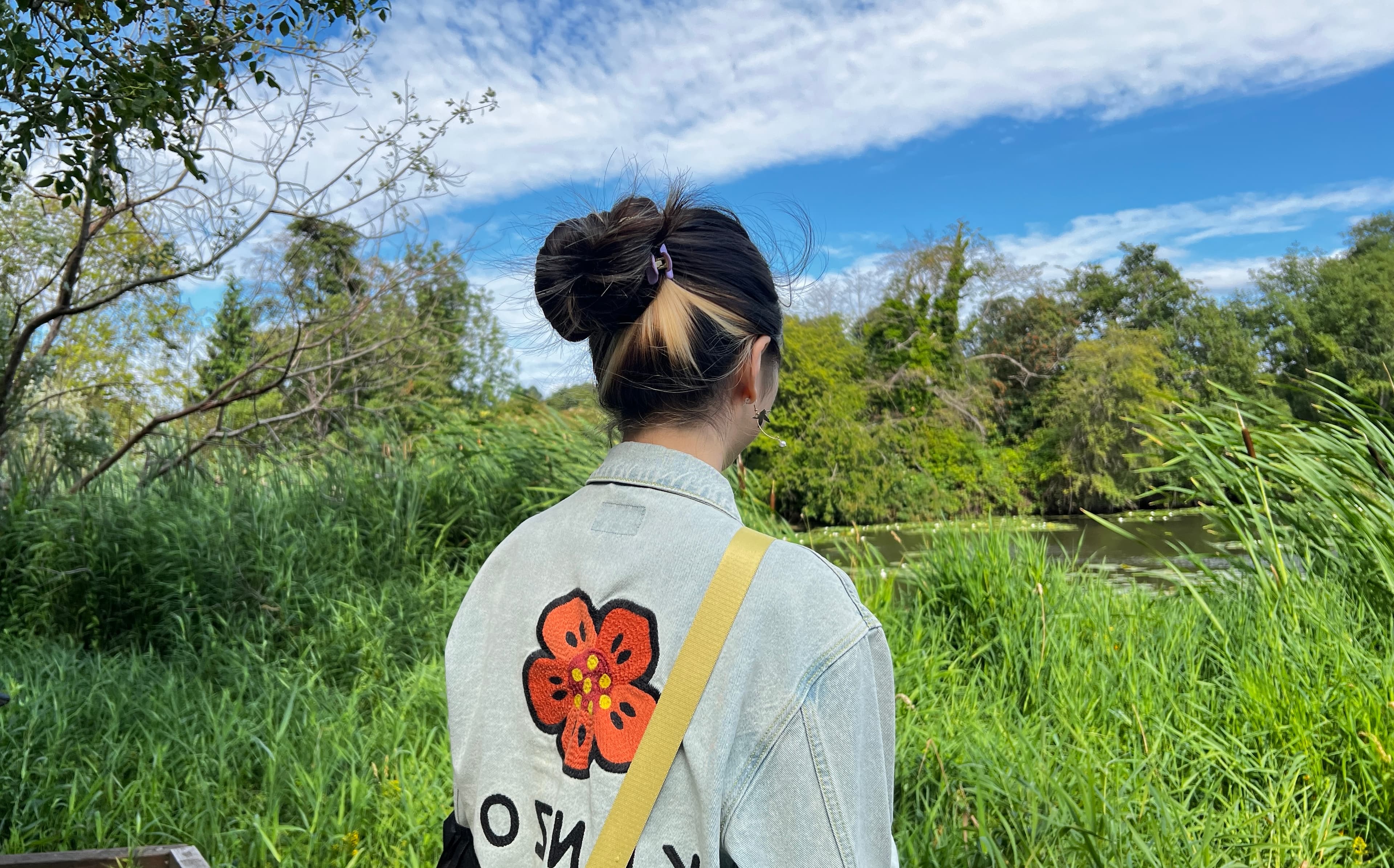
While birding-by-ear does not depend on any gear or visual acuity, which opens the practice of birding to more people, including blind and low vision (BLV) birders and novice sighted birders.
Being fully present with birds is mindful birding
Listening pulls you into the present. To follow a call you have to be there, attending to what is around you, and that attention is mindful birding.
What's more beautiful is what we heard from people with blindness and low vision that birds are their friends.
Birding is a way of life.
What interests me the most is this unique perspective of birding, enjoying birds in an accessible way, so how can we share it with more birders?
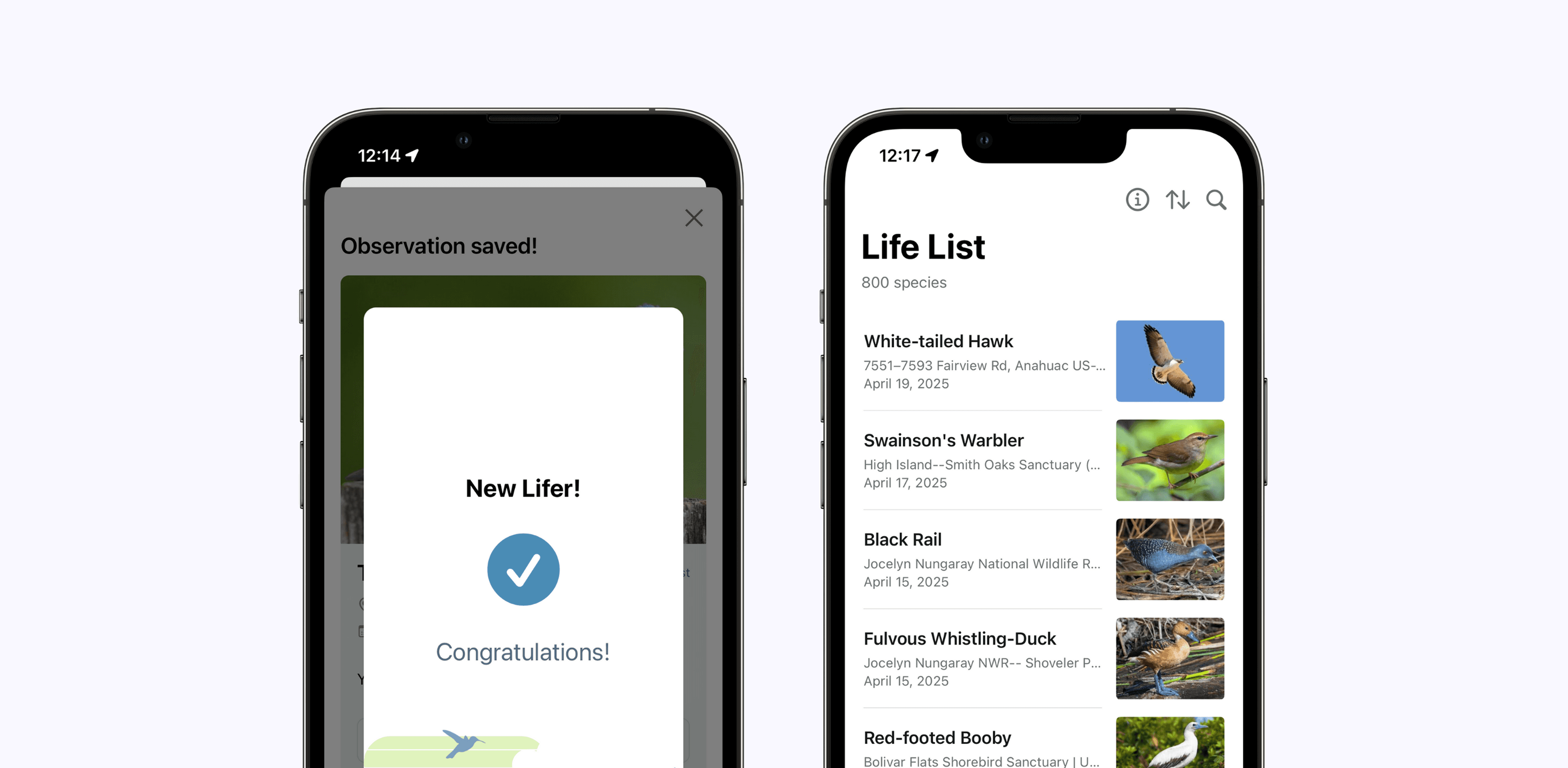
Therefore, we proactively pitched the idea to Merlin Bird ID (opens in a new tab) by Cornell Lab of Ornithology (opens in a new tab), the sound identification app loved by 10 million+ birders, to make birding more accessible and enjoyable by more people.
Part 2. Research
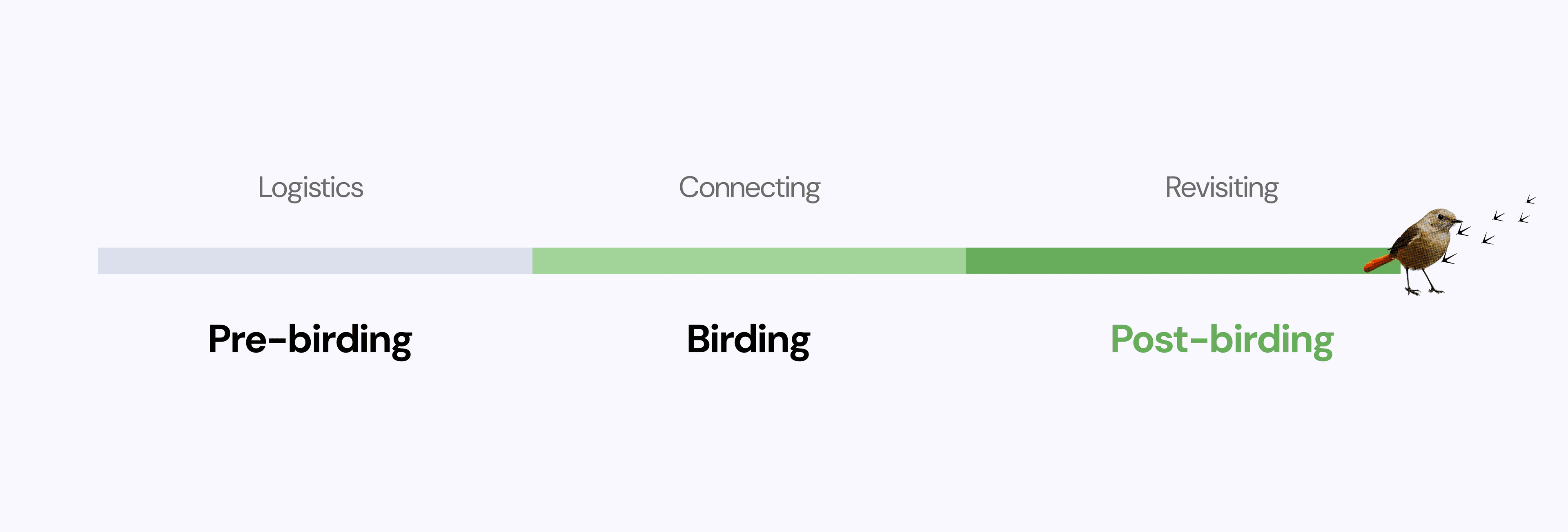
What happens once the birds are gone is underexplored
Previous research (opens in a new tab) found that it's after birding when birders have opportunity to learn more about birds and create deeper connections. However, most birders don’t look back on their past birding media because they can't find it in current apps.
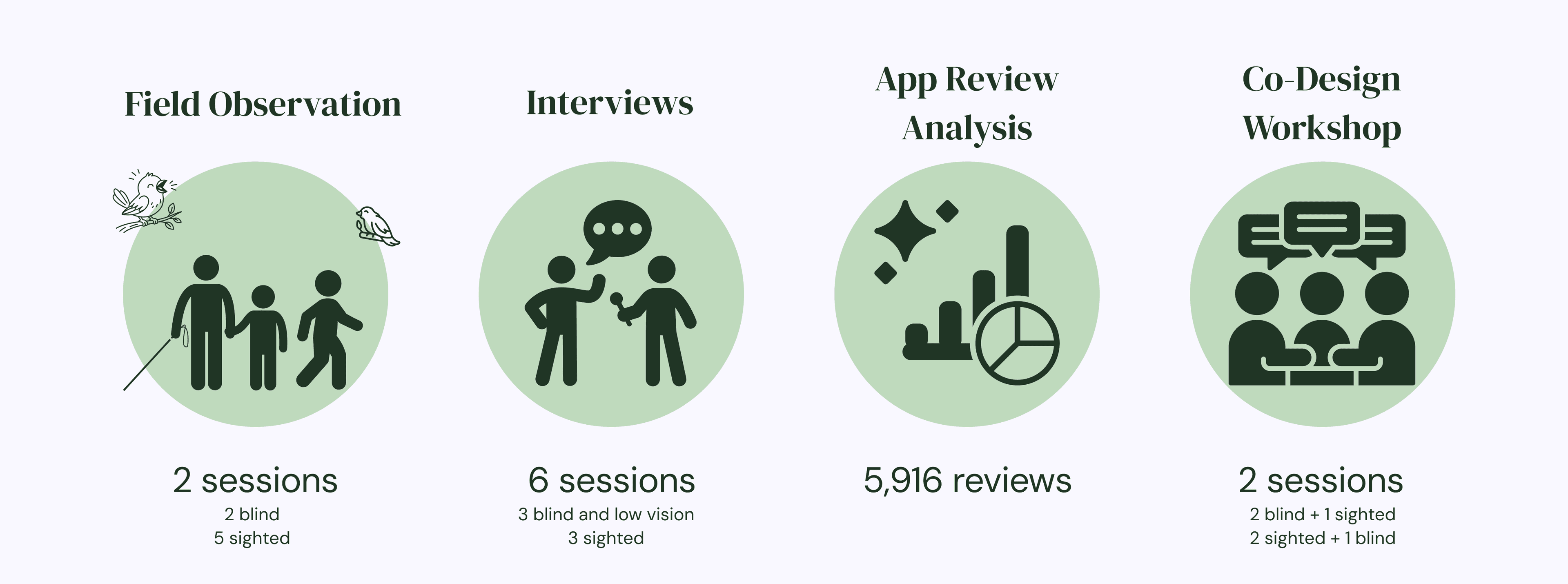
To find out how people of all visual abilities reminisce about past birding encounters, we conducted a series of research with blind and low vision, and novice sighted birders to dive deep in mindful birding practice.
I designed the research to observe a BLV birder's experience directly since I can't fully access
Because of the limitation as a sighted researcher and designer, I insisted on listening closely to what BLV birders actually wanted and working with them to shape what could improve.
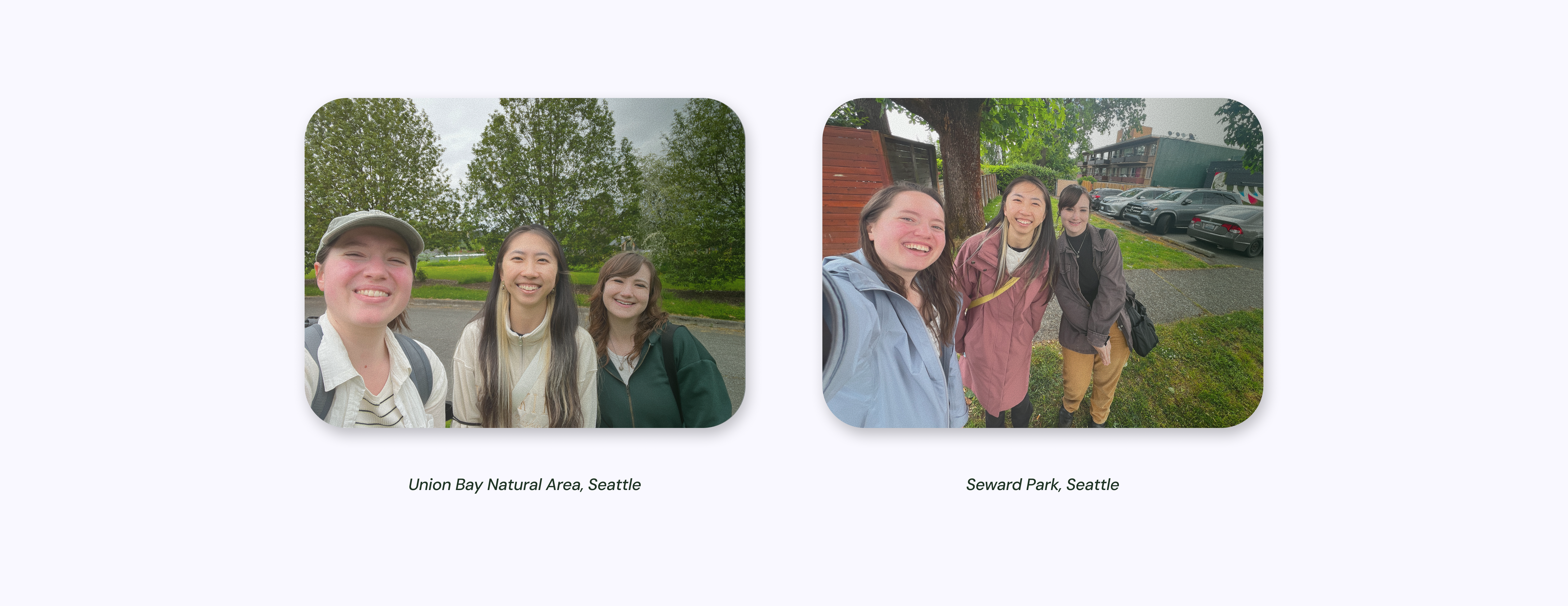
Therefore, we first went out with BLV and novice birders in their natural environment to see firsthand how they navigate the experience.
I recruited the novice sighted birders, facilitated three interviews, and then did thematic analysis and synthesized all the data, surfacing meaning-making patterns through birders' stories. App store reviews also helped validate those themes at scale.
Across visual abilities, people want to relive an outing and share it
I learned from interviews that people of all visual abilities wanted to share birding experience with others, something the app doesn't currently support.
Therefore, I designed the co-design workshop flow and structure for mixed-visual-ability birders, building 3 audio-focused activities around post-birding to learn what they would share, and how, if they could.
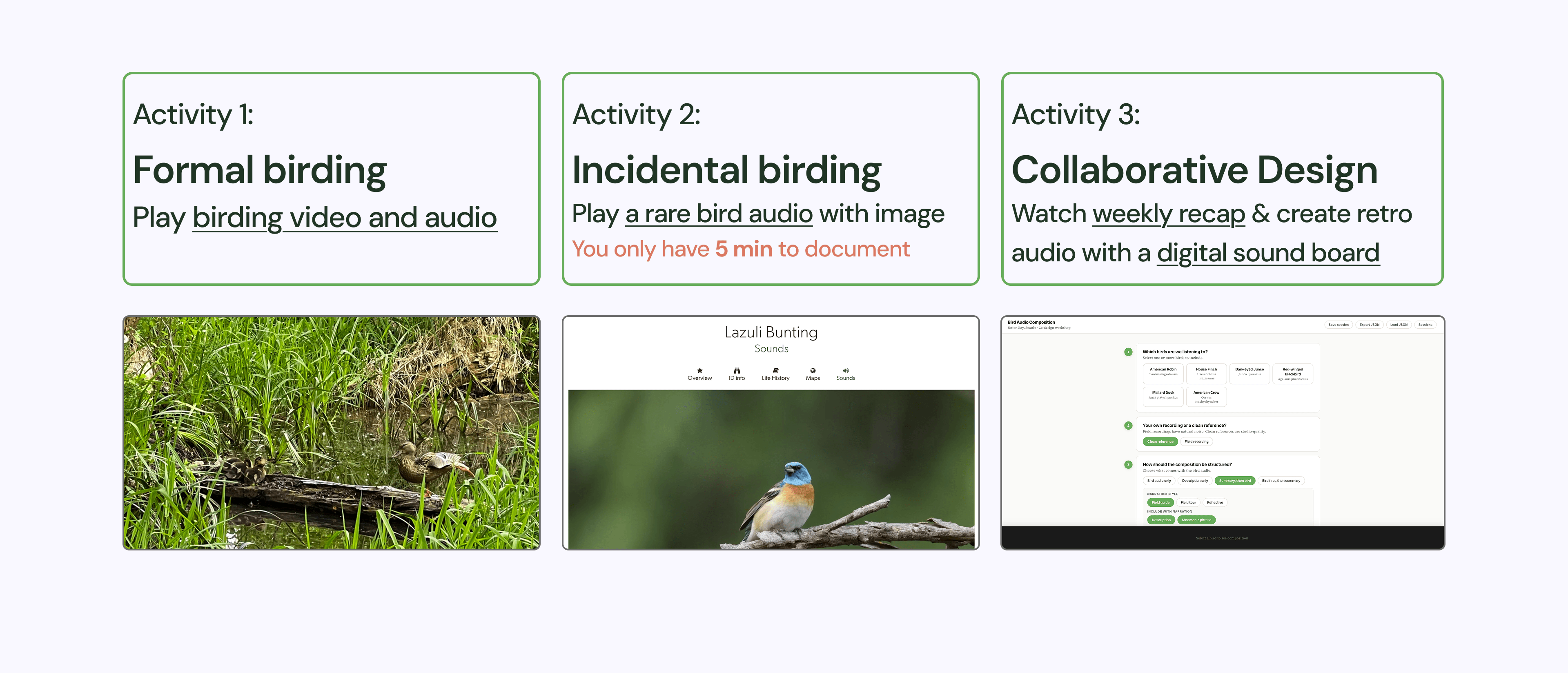
In the form of roundtable, I asked mindful birders to share what is important for them after formal birding and incidental birding respectively.
Then we used vibe-coded Bird DJ tool to test audio artifacts directly: bird recordings paired with optional context, like a description of the outing, the weather, the location, or a mnemonic.
Using thematic analysis and synthesis, I led the data analysis of both the co-design sessions.
Part 3. Findings
Sharing recordings turns into a way of learning, deepens connection with birds
Our research points toward an audio-first feature that lets birders capture, revisit, and share what they experience during a birding outing. This allows mindful birders of all visual abilities to reminisce their past birding outings more easily.
To break it down, I first assumed blind birders would gravitate toward sound and sighted birders toward sight. Our co-design sessions partly confirmed this: one blind birder was surprised by how visually focused sighted birders were.
But the assumption only went so far. Novice sighted birders felt just as strongly about bird song as BLV participants did.
I would probably say hearing [is the most enjoyable sense], because 99 [percent] of bird songs, I think, are great.
Blind participants went further still, describing what that sound made possible for them, not just enjoyment, but access itself.
Bird song just makes it so accessible to us [...] Being able to connect with nature, so much of nature is so visual.
Both groups also converged on what happened after listening. Regardless of visual ability, sharing bird media is how people re-engaged with a past encounter, not only for reliving the memory, but also for improving their own birding knowledge as well.
I usually send videos to my brother... [Through him, I learned about] red-breasted merganser, and I didn't know what it was when I first saw it.
I'll almost always listen to it [bird songs others shared], because if they're sharing it, then they're sharing it for a reason, and it's probably quite good.
Part 4. Next Steps
Creating universal design
We are moving into the design phase, closely working with Merlin Bird ID (opens in a new tab) design and developer teams to translate these findings into a concept grounded in what we learned from participants.
Stay tuned! ✨
What I learned
The best way to advocate for users is to hear their stories and tell those stories to more people. When you can't simply empathize with someone, the next best thing is to work with them directly and listen to what they want.
Conducting interviews with audio only is definitely a challenge: knowing when to jump in, when to step back, and making sure who was speaking and who was next always need to be clear since participants couldn't rely on visual cues, especially in co-design sessions with multiple participants and researchers at once